How Long Can a 12V Car Cooler Run Without Draining the Battery?
There is nothing quite like hitting the open road with a fully packed car and a cold beverage waiting for you. Whether you are driving a rental SUV across the country or taking your family minivan to a weekend camping spot, a portable 12V car cooler is an amazing travel accessory. But that convenience comes with a catch.
If you leave your cooler plugged into the cigarette lighter when the engine is off, you run the risk of waking up to a completely dead battery. Nobody wants to ruin their vacation waiting hours for a tow truck.
So, exactly how long can a 12V car cooler run without draining the battery?
In this guide, I will break down the simple math behind car batteries, explain the difference between your personal car and a rental car, and share practical tips to keep your food cold without getting stranded.
Quick Answer
A standard 12V car cooler can safely run for 1 to 3 hours while the engine is turned off without draining your vehicle’s battery. The exact time depends on the health of the car battery, the size of the battery, and how much power the cooler draws. To avoid a dead battery, always unplug your 12V cooler when the engine is not running for extended periods.
Understanding How 12V Car Coolers Use Power
To understand how your portable cooler impacts your vehicle, it helps to know where the power is coming from.
When your car is running, the engine turns an alternator. The alternator generates electricity, which powers your headlights, radio, air conditioning, and your 12V cigarette lighter port. As long as the engine is running, your car cooler is powered by the alternator, not the battery. You can run a 12V cooler indefinitely while driving.
However, the moment you turn the engine off, the alternator stops. If your 12V port remains active, the cooler begins pulling power directly from the car battery.
Starting Batteries vs. Deep Cycle Batteries
Standard car batteries are known as “starting batteries.” They are designed to deliver a massive, quick burst of energy to start the engine, and then immediately be recharged by the alternator. They are not designed to provide a slow, steady trickle of power over a long period.
If you drain a standard starting battery too far, it physically damages the internal lead plates. Learning about your vehicle’s electrical limits is easier if you check the Department of Energy’s guide on vehicle batteries to see exactly how these starting batteries differ from the deep-cycle batteries used in RVs.
Most standard car coolers pull about 3 to 5 amps of power. While this sounds low, a standard car battery will struggle to start the engine if it loses just 20% to 30% of its total capacity.
Key Factors That Affect Your Battery’s Lifespan
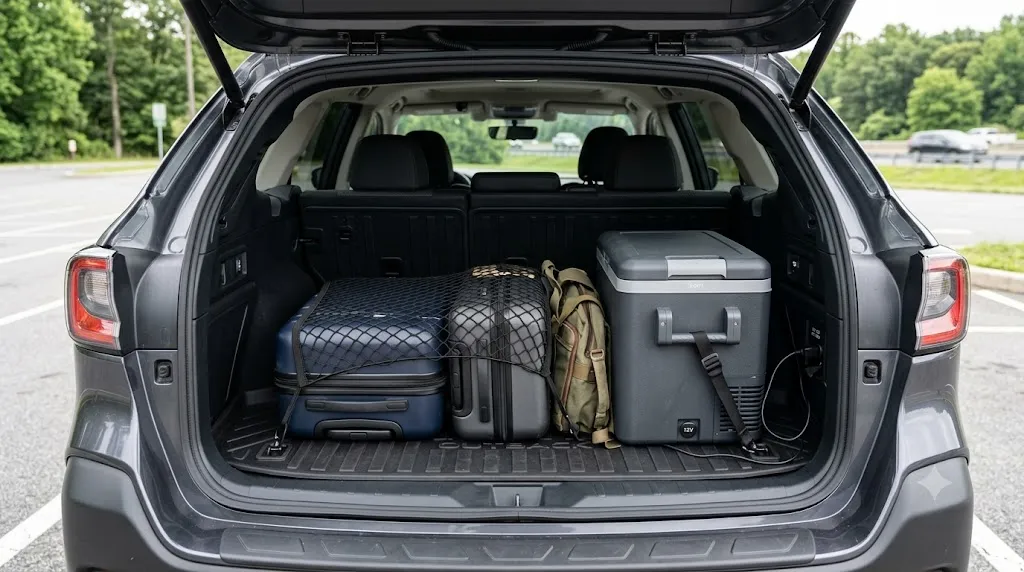
Not all cars, and not all coolers, are created equal. The 1-to-3-hour rule is a great baseline, but several factors will determine your exact safe running time.
1. Battery Size and Age
A brand-new, heavy-duty battery in a large pickup truck can handle a cooler much longer than a three-year-old, compact battery in a small economy sedan. Cold weather also temporarily reduces a battery’s capacity, while extreme heat can permanently degrade its lifespan.
2. The Type of Cooler
There are two main types of 12V car coolers on the market, and they use power very differently:
- Thermoelectric Coolers: These are the most common and affordable 12V coolers. They use a fan to pull heat out of the box. They run continuously. Because they never cycle off, they constantly drain 4 to 5 amps from your battery.
- Compressor Fridge/Freezers: These are high-end travel refrigerators. They work exactly like your kitchen fridge. Once they reach the target temperature, the compressor shuts off. They only pull power in short bursts, meaning they are much gentler on your car battery.
3. Outside Temperature
If it is 95 degrees outside and your car is parked in direct sunlight, the interior of your vehicle will heat up incredibly fast. Your cooler will have to work at maximum capacity to keep your drinks cold, drawing more power from the battery.
How to Calculate Your Safe Running Time
If you want to know the exact math for your personal vehicle, you can do a quick calculation.
First, find out your car battery’s Amp Hour (Ah) rating. Most standard sedan batteries are around 40 to 50 Ah.
Next, check your cooler’s manual to find its amp draw (usually 4 amps).
The Math:
- You can only safely use about 20% of your battery’s total capacity before risking a no-start situation.
- For a 50 Ah battery, 20% is 10 usable Amp Hours.
- Divide the usable Amp Hours by the cooler’s power draw: 10 Ah / 4 Amps = 2.5 hours.
In this scenario, 2.5 hours is your absolute maximum limit.
Helpful Table: Cooler Power Draw vs. Safe Runtime
| Type of 12V Cooler | Average Amp Draw | Continuous or Cycled? | Estimated Safe Runtime (Engine Off) |
| Thermoelectric (Budget) | 4 to 5 Amps | Continuous | 1 to 2 Hours |
| Compressor Fridge (Premium) | 2 to 4 Amps | Cycled (Turns on/off) | 3 to 5 Hours |
| Heated Travel Mug / Small Gear | 2 to 3 Amps | Continuous | 2 to 3 Hours |
When to Be Extra Careful With a Rental Car
Bringing a 12V cooler on a rental car road trip is a fantastic way to save money on food. However, renting a vehicle adds a layer of mystery to your road trip setup.
When you drive your own car, you know exactly how old your battery is and how well it performs. When you pick up a rental car at the airport, you have no idea what condition the battery is in. According to NHTSA vehicle maintenance guidelines, regular battery inspections are critical for road safety, but as a renter, you do not have the tools or the time to test the battery’s internal health.
Here is why you need to be highly cautious with 12V coolers in a rental car:
- You Might Pay for the Jumpstart: If your 12V cooler kills the rental car battery, the rental company will likely consider this driver negligence. If you did not purchase the premium roadside assistance package, you could be charged a hefty fee for a tow truck or jumpstart.
- Always-Hot Ports: In some vehicles, the cigarette lighter port loses power the moment you turn off the ignition. In others, the port remains “hot” (active) forever. Because you are unfamiliar with the rental car model, you cannot assume the port shuts off automatically. Before you decline extra coverage at the rental counter, it is smart to review FTC consumer advice on renting cars to fully understand your liability for dead batteries and roadside breakdowns.
- Warning Signs are Easy to Miss: A weak battery might show signs like dimming headlights or a sluggish engine crank. If you have only been driving the rental car for a day, you might not notice these subtle changes before it is too late.
Alex Carter’s Tip:
Never trust an automatic shut-off feature in a rental car. Even if the rental car’s dashboard turns off when you open the door, physically unplug your 12V cooler from the cigarette lighter every single time you park the car for more than a quick bathroom break. It takes two seconds and guarantees you will not drain the battery.
Smart Alternatives to Draining Your Car Battery
If you want to keep your food ice-cold while exploring a national park for a few hours, relying on your car battery is risky. Fortunately, there are smarter ways to power your gear.
1. Use a Portable Power Station
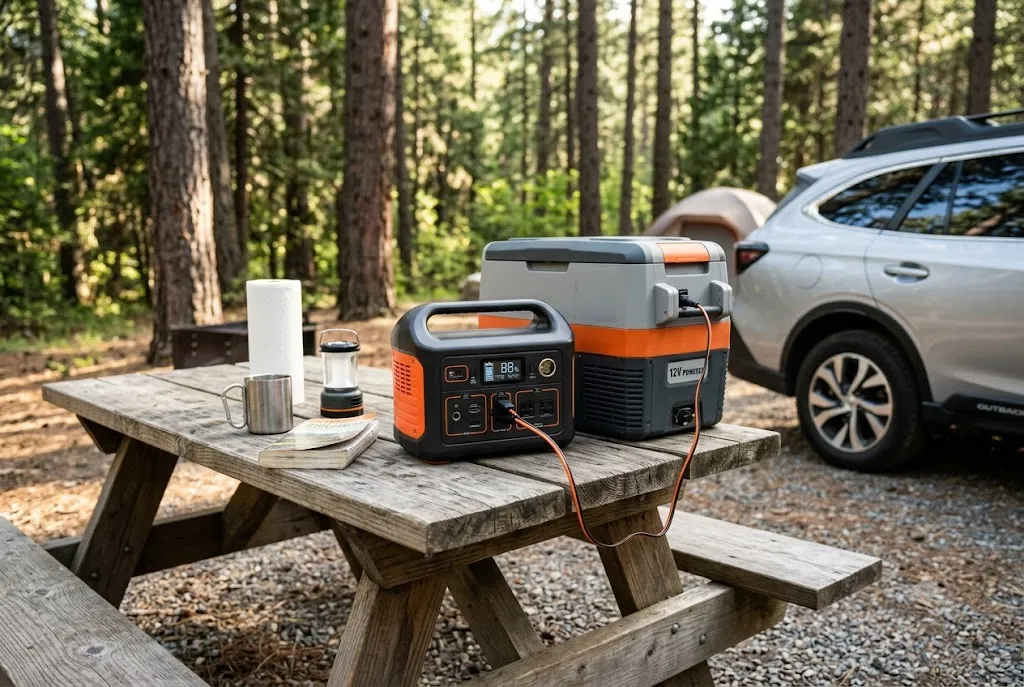
Portable lithium battery packs (like Jackery, EcoFlow, or Bluetti) are the ultimate road trip hack. You can plug your 12V cooler directly into the portable power station when the car is turned off. When you start driving again, you can plug the power station into the car to recharge it. This keeps your car battery completely isolated and safe.
2. Look for Low Voltage Disconnect (LVD)
Premium compressor car fridges often feature a built-in Low Voltage Disconnect. This safety feature constantly monitors your car battery’s voltage. If the battery drops below a safe starting threshold (usually around 11.5 volts), the cooler automatically shuts itself off. If your cooler has this feature, always set it to the “High” protection setting.
3. Pre-Chill and Use Ice Packs
12V coolers are excellent at keeping things cold, but they struggle to cool down warm items. Before your trip, plug the cooler into a wall outlet in your house (using an AC adapter) and let it get cold overnight. Add a few reusable ice packs inside. When you park your car and unplug the cooler, the ice packs will hold the cold air inside for several hours without needing battery power.
Common Mistakes Drivers Should Avoid
When using car accessories, small oversights can lead to major headaches. Avoid these common road trip mistakes to protect your vehicle:
- Leaving the cooler plugged in overnight: Unless you are connected to an external power station, leaving a standard thermoelectric cooler plugged into an active 12V port overnight is a guaranteed way to wake up to a dead battery.
- Starting the engine with the cooler plugged in: When you turn the key, the starter motor needs maximum power. A plugged-in cooler can cause a power surge or blow a fuse in your 12V port. Unplug it before starting the car, then plug it back in.
- Blocking the cooler’s cooling vents: 12V coolers need airflow to dissipate heat. If you pack sleeping bags or luggage tightly against the cooler’s fan vents, the motor will overheat, draw more power, and potentially burn out.
- Assuming all 12V ports are the same: Some vehicles have ports in the front dash that turn off with the key, while ports in the rear trunk remain “always on.” Test your ports before assuming they shut down.
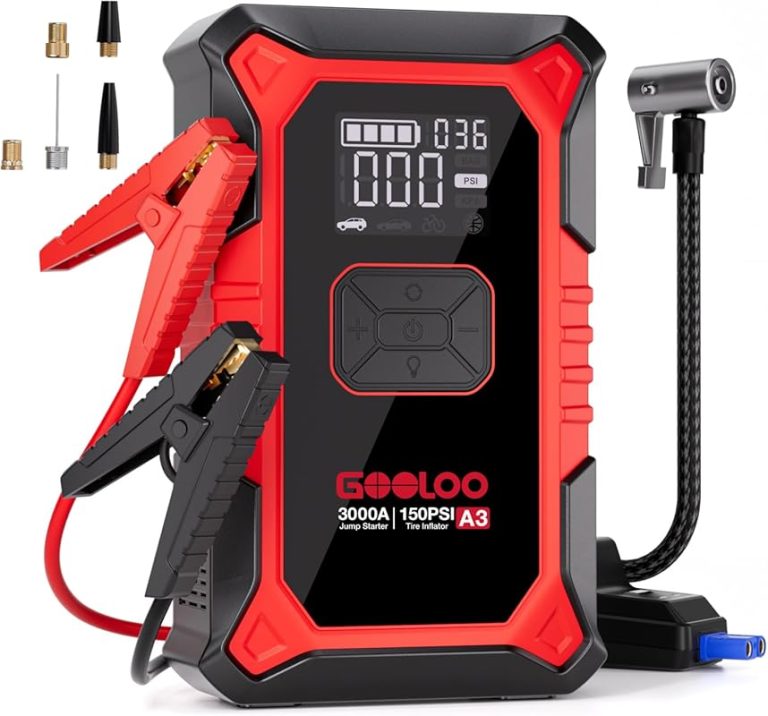
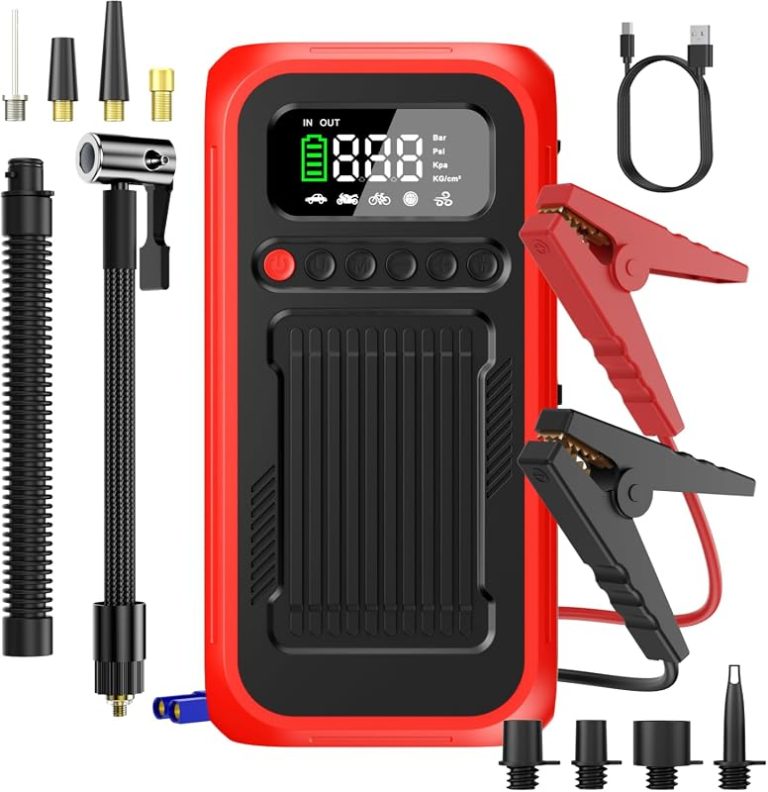
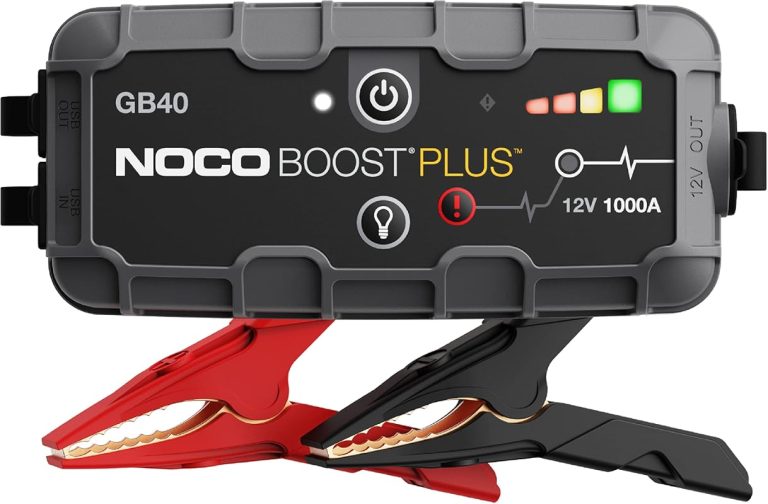
- Forgetting a portable jump starter: If you are traveling with high-draw electronics, always carry a portable lithium jump starter in your glovebox. It is cheap insurance against a dead battery.
FAQs
Does the 12V port turn off when the car is off?
It depends entirely on the vehicle make and model. Many modern cars cut power to the 12V port when the ignition is turned off and the driver’s door is opened. However, some older vehicles, pickup trucks, and specific SUVs have “always hot” ports that constantly draw power. You must test your specific vehicle to be sure.
Will a 12V cooler kill my battery overnight?
Yes. A standard 12V thermoelectric cooler draws between 4 and 5 amps continuously. If left plugged into an active port overnight (8 to 10 hours), it will pull 30 to 50 Amp Hours from your battery, which will completely drain a standard car battery and leave you stranded.
Do I need a dual battery setup for a car fridge?
If you only take weekend road trips or use the cooler while driving, a dual battery setup is not necessary. A dual battery is generally only required for serious overlanding, off-grid camping, or van life where you need to run a compressor fridge 24/7 without turning the engine on for days at a time.
Can I just use a regular cooler with ice instead?
Absolutely. Traditional ice coolers require zero electricity and carry no risk to your vehicle’s battery. The main downside is that melting ice can make your food soggy, and you have to continuously buy bags of ice on the road.
Are rental car companies responsible if a dead battery leaves me stranded?
Generally, no. If the battery dies because you left an accessory plugged in or left the headlights on, the rental car company considers that driver error. Unless you purchased their premium roadside assistance add-on, you will be responsible for the cost of the service call.
What is a Low Voltage Disconnect (LVD)?
A Low Voltage Disconnect is a safety mechanism built into high-end 12V car fridges. It monitors the voltage of your car battery. If the battery voltage drops too low (indicating the battery is getting weak), the LVD will automatically shut down the cooler to ensure your car still has enough juice to start the engine.
Conclusion
Traveling with a portable cooler can save you money, keep your snacks fresh, and make long drives much more enjoyable. However, knowing how long a 12V car cooler can run without draining the battery is essential for a stress-free trip.
As a general rule, you should never run a 12V cooler for more than 1 to 3 hours on a standard car battery with the engine off. When you are renting a car, you should be even more conservative since you cannot guarantee the health of the vehicle’s battery.
To protect yourself, make it a habit to physically unplug your cooler whenever you park the car, consider picking up a portable power station for long stops, and always pack a portable jump starter just in case. Stay prepared, protect your battery, and enjoy the open road!