How Long Does a Jump Starter Hold a Charge?
Most jump starters hold a charge for months, but heat, age, and storage conditions can shorten that window. For travel, top it off every 1 to 3 months and check compatibility before relying on it.
A jump starter can hold a charge anywhere from a few months to well over a year, depending on the battery type, storage conditions, and how often you top it off. For most travelers, the practical answer is simple: check and recharge it every 1 to 3 months so it is ready when a rental battery is weak or a road trip goes sideways.
- Battery life varies: Charge retention depends on chemistry, age, storage temperature, and usage habits.
- Travelers should top off regularly: A 1 to 3 month recharge schedule is a practical starting point.
- Storage matters: Cool, dry indoor storage usually preserves charge better than a hot car or damp.
- Compatibility comes first: Confirm the unit fits your vehicle type and follows rental-company rules.
- Safety beats convenience: If warning lights or damage are present, contact roadside help instead of forcing a.
How Long Does a Jump Starter Hold a Charge? Quick Answer for Rental Drivers
There is no single universal number. Many compact lithium jump starters lose charge slowly in storage, while older or larger units may need more frequent top-offs, especially if they sit in a hot car or a cold garage.
If you keep one for rental-car trips, the safest approach is to assume it may not be full when you need it unless you recently charged it and checked the indicator. That matters most for airport pickups, weekend rentals, and long drives where you do not want to discover a dead accessory at the worst time.
What Affects Jump Starter Battery Life in 2025?
Charge retention depends on the internal battery chemistry, the unit’s age, how it is stored, and how often it is used. The same accessory can behave very differently in a climate-controlled closet versus a hot trunk or a cold garage.
Battery type, capacity, and self-discharge rates
Most modern portable jump starters use lithium-based batteries because they are compact and convenient for travel. Lithium units generally hold charge better than older battery types, but they still self-discharge over time and can lose capacity as they age.
Larger-capacity models may give you more jump attempts or extra phone charging, but capacity alone does not guarantee long shelf life. The quality of the battery management system, the condition of the cells, and how often the unit is stored near full charge all matter.
Temperature, storage conditions, and age
Heat is one of the biggest enemies of stored battery power. Leaving a jump starter in a hot car, especially in summer airport parking or a sun-baked trunk, can shorten battery life and reduce long-term reliability.
Cold weather can also reduce available power temporarily. If you are traveling to a winter destination, a jump starter that has been sitting in a freezing vehicle may not perform as well until it warms up.
Age matters too. Even if a jump starter is rarely used, the battery slowly degrades over time. If yours is several years old, check the manufacturer’s storage guidance and do not assume the battery is still at its original performance level.
How often you use the jump starter
Frequent use usually means more charging cycles, and every cycle adds wear. A unit that gets used regularly for multiple vehicles or repeated short trips may need replacement sooner than one that is only kept for emergencies.
On the other hand, a unit that never gets checked can also fail you. Occasional testing and top-offs are usually better than letting it sit untouched for months.
Check the charge indicator before each trip, then recharge the unit if the battery is not near full. That simple habit helps more than waiting until the night before departure.
Who This Guide Is For: Rental-Car, Road-Trip, and Airport Travelers
This topic matters most for travelers who depend on compact emergency gear instead of a full garage toolkit. If you rent vehicles often, pack light, or move between airports and hotels, a jump starter can be a practical backup.
Drivers relying on compact emergency gear
Not everyone wants to carry bulky cables or ask a stranger for a jump. A small portable starter can be easier to store in a backpack, carry-on-sized bag, or rental trunk, as long as you follow the battery and airline rules that apply to your trip.
Travelers picking up vehicles at airports or on tight schedules
Airport pickup often means limited time, unfamiliar parking areas, and little patience for mechanical problems. If the rental battery seems weak, having your own emergency gear can reduce stress, but only if the unit is charged and you know how to use it safely.
Before leaving the airport rental lot, confirm the fuel level, mileage, toll policy, return location, and after-hours return rules.
Anyone comparing jump starters for rental compatibility
Some travelers buy a jump starter mainly for temporary use in rental cars. In that case, portability, safety, and compatibility matter more than oversized power claims or flashy extras you may never use.
How to Store and Maintain a Jump Starter So It Holds a Charge Longer
Good storage habits make a bigger difference than many buyers expect. If you want the unit to be ready during a trip, treat it like a travel essential instead of a forgotten emergency item.
Ideal charging habits and top-off timing
Most owners should follow the manufacturer’s charging guidance, but a practical rule is to top off the unit every 1 to 3 months. If the indicator shows a lower charge sooner, recharge it earlier.
Before a road trip or airport pickup, charge it fully the day before you leave. That gives you time to confirm the indicator and avoid starting your trip with an uncertain battery.
Safe storage in a car, suitcase, or garage
Store the jump starter in a cool, dry place whenever possible. A climate-controlled closet or indoor shelf is usually safer than a hot trunk or a damp garage corner.
If you plan to fly with it, check airline battery rules before packing. Jump starters contain batteries that may be restricted in checked baggage or carry-on luggage depending on capacity and carrier policy, so confirm the current rules before you travel.
Common mistakes that drain the battery
Leaving the unit fully discharged for long periods can hurt battery health. So can storing it in extreme heat, ignoring warning lights on the device, or using it as a routine phone charger and never recharging it afterward.
Another common mistake is assuming a brand-new unit arrives fully charged. Always check it before your trip, even if it came out of the box recently.
Do not use a jump starter in wet, damaged, or visibly swollen condition. If the battery casing looks abnormal, stop using it and follow the manufacturer’s disposal guidance.
Vehicle Compatibility and Safety Basics Before You Use It
A jump starter is only helpful if it matches the vehicle and you connect it correctly. Before touching the clamps, make sure the car actually needs a jump and that the accessory is appropriate for the situation.
12V passenger vehicles, SUVs, and rental fleets
Most portable jump starters are designed for standard 12V passenger vehicles, which includes many rental sedans, SUVs, and crossovers. But vehicle size, engine type, and battery location can affect whether a specific unit is suitable.
Check the jump starter’s instructions for engine size limits and vehicle compatibility. If the rental is a hybrid, electric vehicle, or a vehicle with a separate auxiliary battery setup, the jump starter may not be the right tool.
When a jump starter is not the right tool
If the vehicle has a more serious electrical issue, a damaged battery, or a warning light that suggests a mechanical problem, a jump starter may only be a temporary workaround or may not help at all. In those cases, contact the rental company or roadside assistance instead of forcing the issue.
If a warning light appears while driving, pull over safely when appropriate and contact the rental company or roadside assistance.
Safety checks before connecting clamps
Before connecting anything, turn off the ignition, accessories, and lights. Make sure the clamps are attached to the correct terminals and that the cables are not damaged.
Keep loose clothing, jewelry, and hands clear of moving parts. If the battery area is hot, leaking, or visibly damaged, stop and get professional help.
Do not modify, unplug, reset, bypass, or tamper with a rental vehicle system without written permission from the rental company.
Rental-Car and Airport Rules That Can Affect Your Emergency Gear
Rental policies can shape what you carry, where you store it, and how you use it. The exact rules vary by company, airport, and location, so always confirm the current rental agreement.
What rental-company policies may limit or require
Some companies may have rules about aftermarket accessories, battery equipment, or items stored in the vehicle. Others may simply require that you return the car in the same general condition and report any electrical issues promptly.
If you are unsure whether a jump starter is acceptable in the rental, ask the counter staff or review the agreement before leaving the lot.
Pickup timing, counter steps, and return rules
At pickup, use the time to inspect the vehicle, confirm the fuel level, and note any dashboard warnings. If the battery seems weak or the car has trouble starting, report it immediately rather than waiting until you are already on the road.
At return, make sure the accessory is removed, charged, and packed with your travel gear. If you used it during the trip, note that in your records in case the rental company asks about the starting issue later.
After-hours return checks and documenting the vehicle condition
After-hours returns can make documentation harder because no staff member may be present. Take clear photos of the vehicle, the dash, the fuel gauge, and the odometer before you drop the keys or use the return box.
- Photograph exterior scratches, wheels, windshield, fuel level, mileage, and interior condition.
- Check tires, lights, mirrors, warning lights, and dashboard alerts before leaving the lot.
- Report issues to the rental desk before starting the trip.
How to Choose a Jump Starter for Travel: Features That Matter Most
If you are buying one for rental use, focus on portability and practical features instead of the highest spec number on the box. The best choice is usually the one you can store, charge, and use confidently when traveling.
Compact storage and carry-on-friendly design
Look for a unit that fits easily in a glove box, backpack, or carry-on-sized bag. Compact size is especially useful for airport travelers who do not want to dedicate much luggage space to emergency gear.
That said, smaller units may trade away some power or extra features. Match the size to the type of vehicle you usually rent.
USB power, phone charging, and multi-device usefulness
Many jump starters also work as USB power banks. That can be helpful for charging a phone, tablet, or navigation device during a long travel day.
Still, phone charging is a bonus, not the main job. If the battery is weak, prioritize keeping it ready for vehicle emergencies instead of draining it on electronics.
Tire inflation, emergency visibility, and weather-ready extras
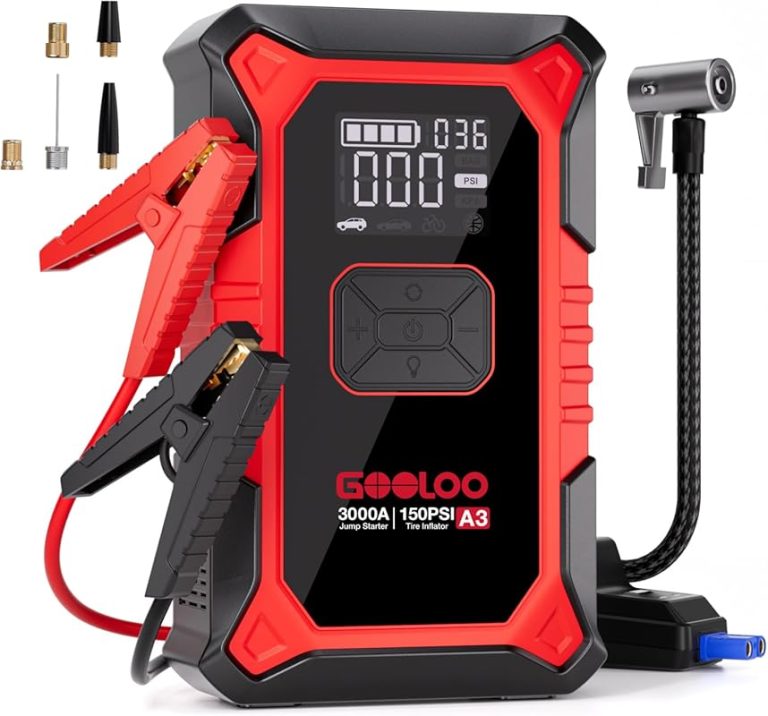
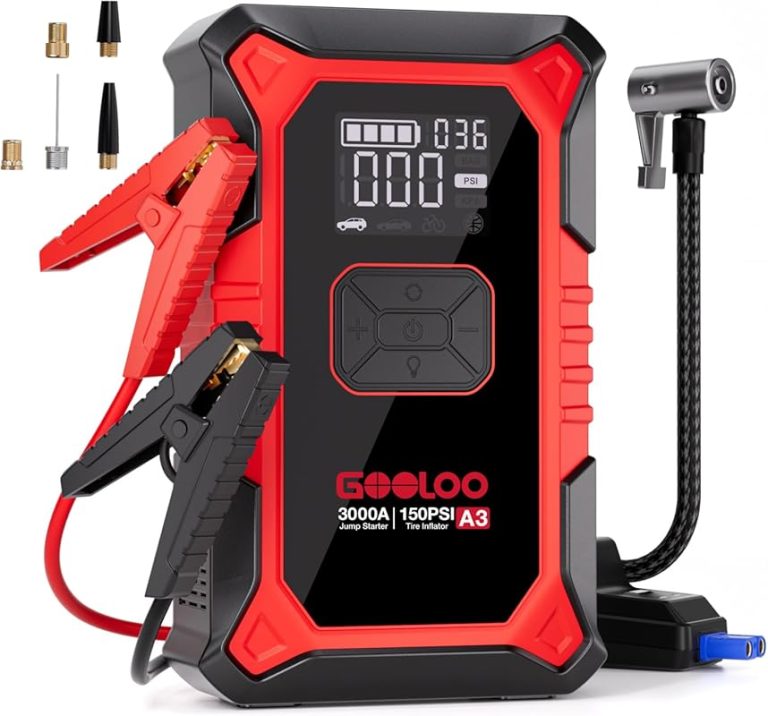
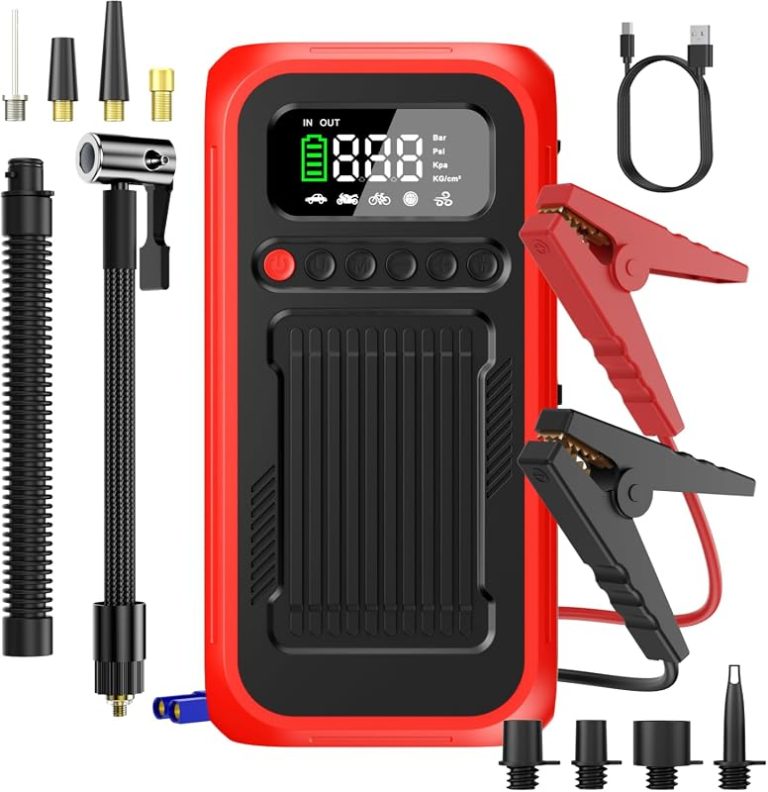
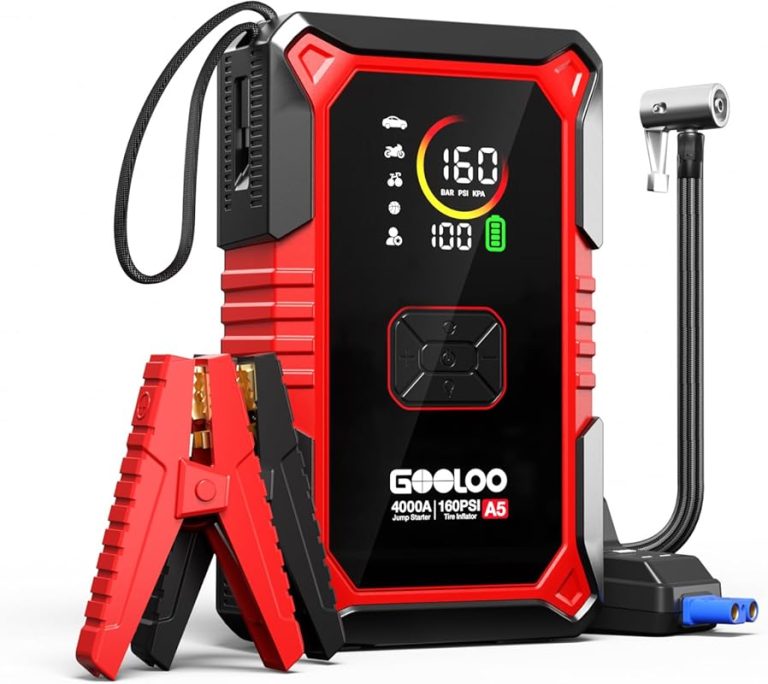
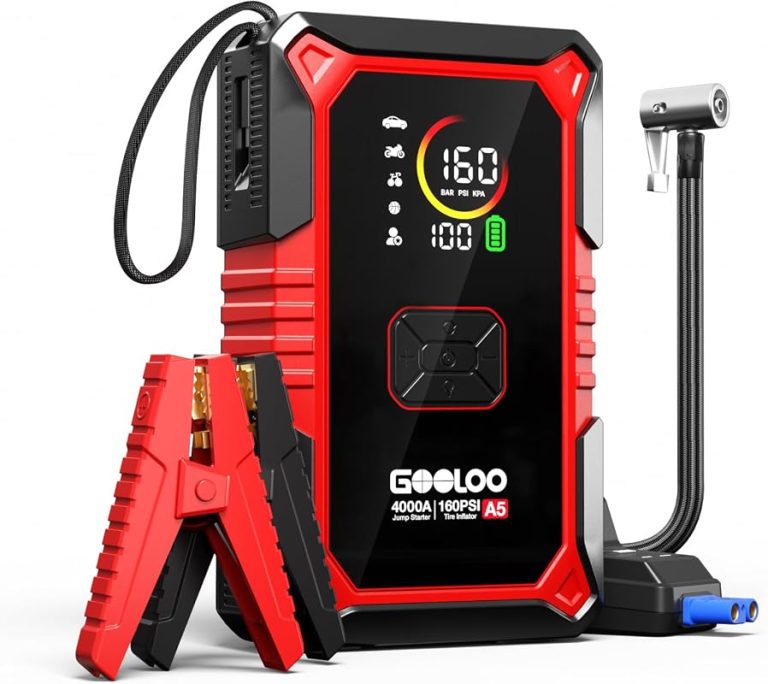
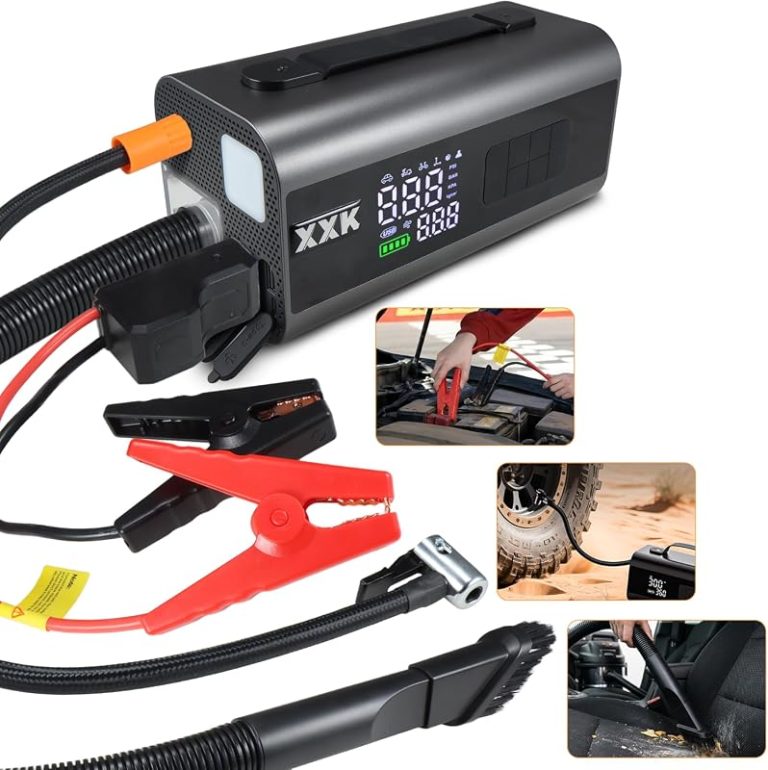
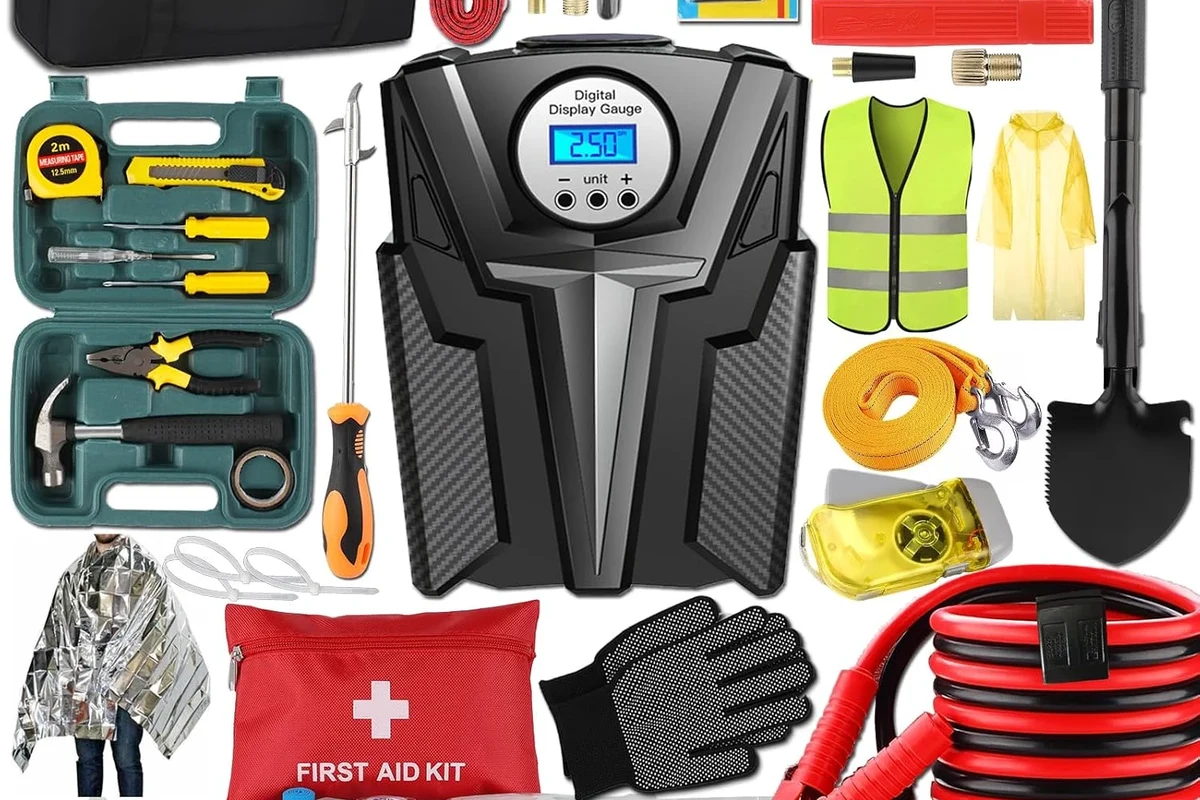
Some travel kits combine a jump starter with a tire inflator, flashlight, or emergency light. Those extras can be useful on road trips, especially when you are dealing with dark parking lots, cold weather, or a low tire at a rest stop.
- Phone mount
- USB car charger
- Tire inflator
- Flashlight
- Basic emergency kit
Matching the unit to your rental-car needs
Think about the vehicles you actually rent. A compact starter for a sedan may be enough for occasional travelers, while frequent SUV renters may want a unit with more margin and clearer instructions.
Also check the warranty, return policy, and storage guidance from the manufacturer or retailer before buying. Those details can matter more than extra packaging claims.
Practical Use Tips, Common Mistakes, and When to Call for Help
The safest way to use a jump starter is to stay calm, follow the manual, and know when the problem is bigger than a dead battery. If anything feels uncertain, stop and ask for help.
What to do before a jump-start attempt
Confirm the battery is the likely issue. If the vehicle has no lights, no power, or obvious electrical damage, a jump starter may not solve the problem.
- Read the device instructions before your trip.
- Check battery level and clamp condition before use.
- Call for help if the vehicle shows signs of a larger problem.
- Do not connect clamps blindly or rush the process.
- Do not use a damaged, swollen, or overheated unit.
- Do not keep cranking a vehicle that will not start.
Mistakes that reduce performance or create risk
Common mistakes include using the wrong connection points, ignoring the battery indicator, leaving the unit in extreme heat, or assuming it will work on every vehicle. Another mistake is trying to solve a mechanical problem with an electrical tool.
If the car starts but then quickly stalls again, the issue may be beyond the jump starter. In that case, document what happened and contact support.
When to contact the rental company, roadside assistance, or airport support
Call the rental company when the vehicle has a warning light, won’t start after a proper attempt, or appears unsafe to drive. Roadside assistance is often the right next step if you are stranded, far from the airport, or dealing with weather and traffic.
If you are still at the airport lot, the counter staff or lot attendant may be able to help faster than trying to troubleshoot alone.
Final Recommendation: How Long Should Your Jump Starter Hold a Charge for Travel?
For travel use, the best jump starter is one that can hold enough charge between trips that you do not have to think about it constantly. A realistic goal is a unit that stays ready for at least a few months in normal storage, with regular top-offs to keep it dependable.
Best-use guidance for occasional renters
If you rent a car a few times a year, choose a compact unit that is easy to store and simple to recharge. Check it before each trip and after every long gap in use.
Best-use guidance for frequent road-trippers
If you are always on the road, prioritize battery health, clear indicators, and a storage plan that keeps the unit out of heat. Frequent travelers benefit most from a jump starter that is easy to inspect and easy to keep charged.
Simple buying and maintenance checklist for 2025
Before buying or packing one, confirm compatibility with your usual rental vehicles, review airline and rental rules, and store it in a cool place. Then top it off on a schedule, test the indicator before departure, and keep the manual accessible in case you need it.
- Most jump starters need periodic top-offs to stay ready for travel.
- Heat, age, and storage conditions affect charge retention more than casual use.
- Rental-car travelers should confirm compatibility, policy rules, and safe use steps before relying on one.
Frequently Asked Questions
A practical schedule is every 1 to 3 months, or sooner if the charge indicator drops. Always follow the manufacturer’s guidance if it is more specific.
You can store it there only if the rental company allows it and the temperature is reasonable. Heat and cold can shorten battery life, so a cooler indoor location is usually better.
No. Most are made for 12V passenger vehicles, but hybrids, EVs, and some larger vehicles may need different equipment or professional help.
Take photos of the dash, battery area if safe, mileage, fuel level, and any warning lights. Also note the time and contact the rental company if the vehicle seems to have an underlying issue.
A warning light can signal a problem beyond a weak battery. If a light appears or the vehicle behaves abnormally, pull over safely when appropriate and contact the rental company or roadside assistance.
Focus on compatibility with your usual vehicle type, compact storage, clear instructions, and reliable charging habits. Confirm rental and airline rules before you depend on it for travel.